
How Long Do Dental Fillings Last? When to Replace Them
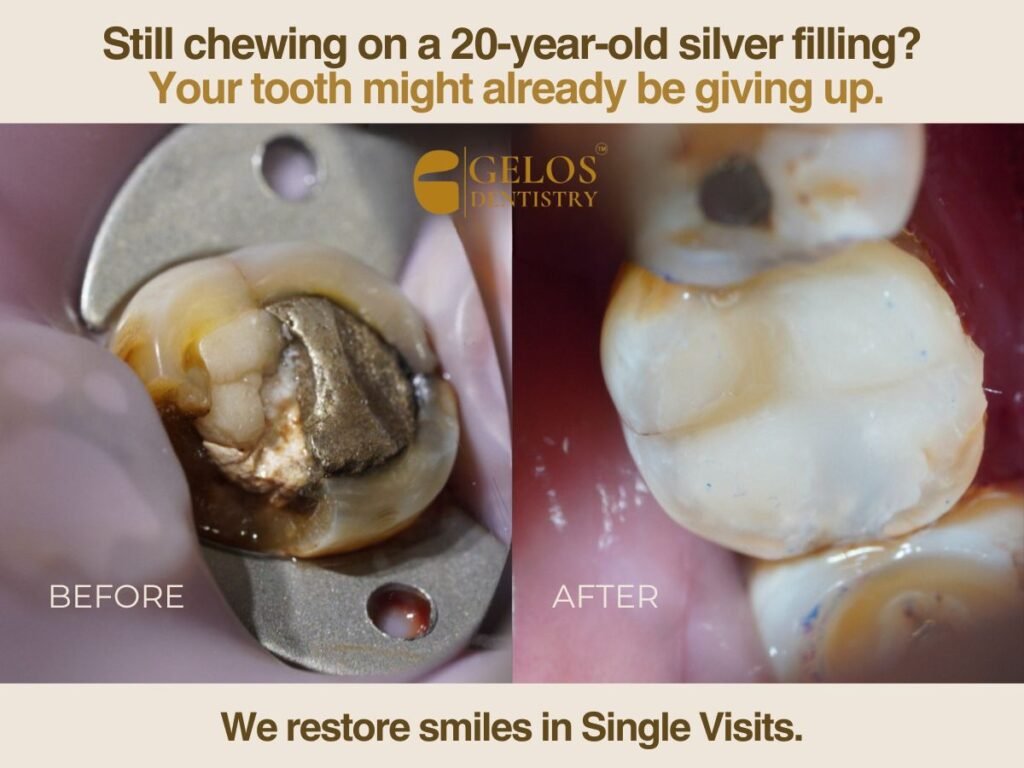

“Perfectly Fine” Old Fillings? What Lies Beneath May Surprise You

Most patients believe that if a tooth isn’t hurting, it doesn’t need attention.
In dentistry, this assumption often leads to delayed treatment and more complex problems later.
Many dental restorations, especially older fillings, can appear stable on the surface while slowly deteriorating underneath. By the time symptoms arise, the damage is often advanced.
This is a closer look at what can happen beneath a seemingly “perfectly fine” filling.
Why Old Fillings Deserve Attention
Dental fillings are not permanent.
Over time, materials such as amalgam or composite undergo wear due to constant chewing forces, temperature changes, and bacterial exposure.
As they age:
- The seal between the filling and tooth can weaken
- Microscopic gaps may form (microleakage)
- Bacteria can penetrate and cause decay underneath
- The surrounding tooth structure can weaken and fracture
These changes are gradual and often occur without pain.
What We Found in This Case
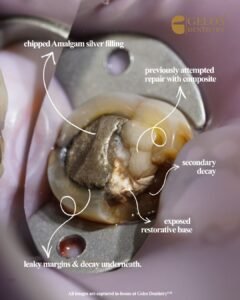
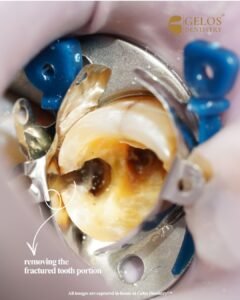
A patient presented with an old amalgam filling that appeared clinically acceptable at first glance. There were no significant symptoms.
However, once the restoration was
removed under proper isolation, the underlying condition revealed multiple concerns:
- Chipped amalgam with compromised margins
- Previous repair attempts using composite material
- Secondary decay extending beneath the filling
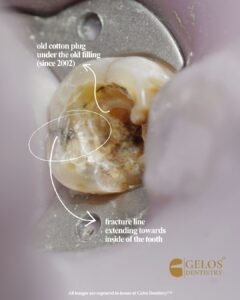
- A fracture line progressing into the tooth structure
- An old cotton base retained under the restoration
While each of these findings can occur individually, their combination indicates long-term structural compromise.
The Hidden Nature of Dental Decay
One of the most important aspects of modern dentistry is understanding that decay is not always visible externally.
A tooth may:
- Look intact
- Function normally
- Cause no discomfort
And still have significant decay beneath an existing restoration.
This is why clinical evaluation, radiographic
assessment, and sometimes exploratory removal of old restorations are necessary to accuratel
y diagnose the condition.
How We Approach Such Cases at Gelos Dentistry

Treatment is not simply about replacing what is visible.
It involves a structured approach focused on both biology and long-term function:
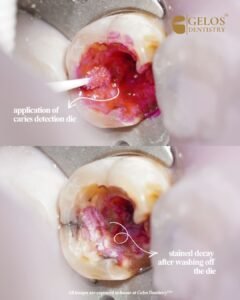
1. Complete Removal of Decay
Using caries detection techniques, all infected dentin is carefully eliminated while preserving healthy tooth structure.
2. Assessment of Structural Integrity
Fractures and weakened areas are identified and addressed to prevent future failure.
3. Pulp Protection
Where the decay is deep, materials such as MTA (Mineral Trioxide Aggregate) are usedtoprotect the pulp and ensure a proper seal.
4. Reinforcement of the Tooth
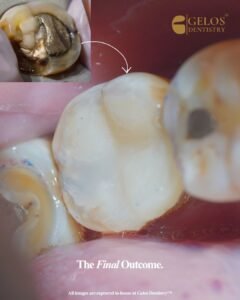
Advanced restorative materials are used to rebuild the internal structure and restore strength.
5. Planning the Final Restoration
Depending on the remaining tooth structure, a long-term solution such as a crown may be recom
mended to ensure durability.
Why Waiting for Pain Is Not the Right Approach
Pain is often a late indicator in dentistry.
By the time discomfort appears:
- Decay may have progressed significantly
- Structural damage may be extensive
- Treatment may become more complex and costly
Early evaluation allows for more conservative and predictable treatment.
When Should You Get Your Fillings Checked?
You should consider a dental evaluation if:
- Your fillings are more than 8–10 years old
- You notice discoloration around a filling
- There is occasional sensitivity while chewing
- The filling feels rough, chipped, or uneven
- You have not had a recent dental check-up
Even in the absence of symptoms, periodic assessment is essential.
Final Thought
A filling is not defined by how it looks on the surface.
Its true condition lies beneath.
Regular evaluation ensures that problems are identified early, treated appropriately, and prevented from progressing into more serious conditions.
At Gelos Dentistry, our focus is not just on treating visible issues, but on understanding and preserving the health of the tooth as a whole.
Book a Consultation
If you have old fillings or want a comprehensive evaluation, our team at Gelos Dentistry can help you understand your current dental condition and guide you toward the most appropriate treatment.