
Why Are Human Jaws Becoming Smaller? Understanding Modern Facial Development
A Curious Trend Dentists Are Seeing More Often
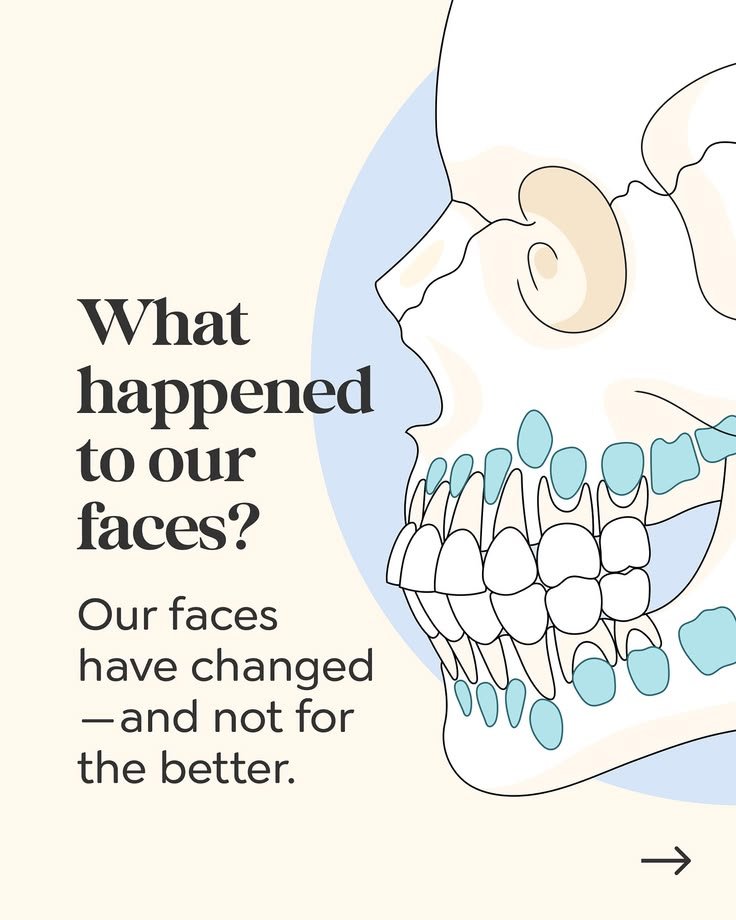
Many people assume that crowded teeth, impacted wisdom teeth, and narrow dental arches are simply genetic traits that run in families.
While genetics certainly play a role, modern research suggests that genetics may not tell the whole story.
Around the world, dentists, orthodontists, and researchers have observed an interesting pattern. As societies have become more modernized, jaw sizes appear to have reduced while the size of teeth has remained relatively unchanged.
The result?
Many people simply do not have enough room for all of their teeth to erupt comfortably within the jaws.
At Gelos Dentistry, we frequently meet patients who wonder why wisdom teeth become impacted or why orthodontic treatment has become so common. Understanding how facial development occurs can provide valuable insight into these questions.
Teeth Have Not Shrunk as Quickly as Our Jaws
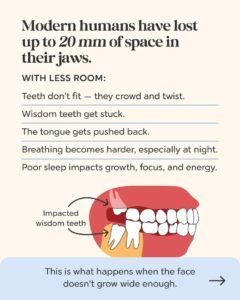
One of the most fascinating observations in craniofacial research is that jaw dimensions appear to have changed more rapidly than tooth size.
Human teeth today are remarkably similar in size to those of previous generations.
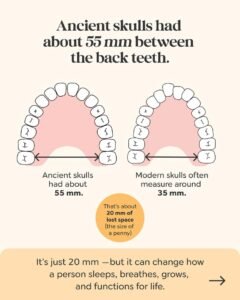
The jaws, however, often appear narrower and shorter.
This difference can create a mismatch between available space and the size of the teeth attempting to erupt.
When there is insufficient space, common problems may include:
- Crowded teeth
- Rotated teeth
- Impacted wisdom teeth
- Narrow dental arches
- Bite irregularities
These conditions have become increasingly common in modern populations.
How Ancient Diets Differed From Modern Diets
One of the leading theories involves changes in the foods we eat.
Historically, people consumed diets that required considerably more chewing.
Meals often consisted of:
- Tough meats
- Fibrous vegetables
- Whole foods
- Less processed ingredients
Chewing these foods placed regular functional demands on the developing jaws and facial muscles.
Modern diets, by contrast, tend to be softer and require significantly less effort.
Foods are often processed, blended, cooked extensively, or refined before consumption.
As a result, children may spend less time chewing and exerting force through their developing facial structures.
Researchers continue to study how these functional differences may influence growth patterns during childhood.
The Relationship Between Function and Growth
The human body adapts to how it is used.
Muscles strengthen with exercise.
Bones respond to mechanical forces.
Facial growth is influenced by similar biological principles.
When the jaws, tongue, and facial muscles function harmoniously, they help guide growth and development. This does not mean chewing alone determines jaw size. However, function appears to play an important role in shaping facial structures during growth.
Modern lifestyles may reduce some of the natural functional stimuli that historically influenced jaw development.
Breathing Patterns May Influence Facial Development
Another area of growing interest is the relationship between breathing and facial growth.
Ideally, breathing occurs through the nose. Nasal breathing helps support normal tongue posture, healthy airway function, and balanced facial muscle activity.
When a child consistently breathes through the mouth due to allergies, enlarged tonsils, chronic congestion, or other factors, the resting position of the tongue may change.
Because the tongue plays an important role in shaping the upper jaw during growth, altered tongue posture may influence facial development over time.
This relationship remains an active area of clinical research and discussion.
Why Crowded Teeth Are So Common Today
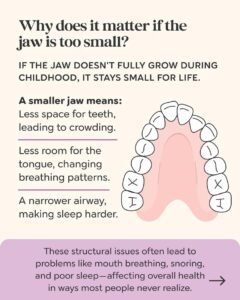
Crowded teeth have become one of the most common reasons patients seek orthodontic treatment.
Many people assume crowding occurs simply because teeth are “too large.”
In reality, crowding often results from a lack of available space within the dental arches.
When the jaws develop with limited width or length, teeth may erupt in less-than-ideal positions.
The outcome may include:
- Overlapping teeth
- Rotated teeth
- Narrow smiles
- Difficulty cleaning between teeth
- Increased orthodontic needs
This helps explain why crowding is frequently observed even in individuals who maintain excellent oral hygiene.
What About Wisdom Teeth?
Wisdom teeth provide another interesting example.
Historically, wisdom teeth often erupted normally because larger jaws could accommodate them.
Today, many individuals lack sufficient space for these teeth to emerge properly.
As a result, wisdom teeth may become:
- Partially erupted
- Impacted
- Tilted
- Trapped beneath the gums
This is one reason wisdom tooth evaluations remain an important part of dental care.
Modern Lifestyle Factors Beyond Diet
Jaw development is complex and influenced by many factors.
Researchers continue to investigate the impact of:
- Diet consistency
- Airway health
- Oral habits
- Tongue posture
- Sleep quality
- Environmental influences
- Genetic factors
No single factor explains every case.
Rather, facial growth appears to result from the interaction of multiple biological and environmental influences throughout childhood.
Can Jaw Development Be Influenced During Growth?
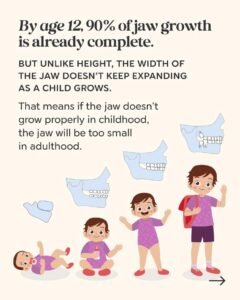
Childhood represents an important period for facial development.
Because growth is still occurring, dentists and orthodontists can often identify patterns that may benefit from early monitoring.
Early assessment does not necessarily mean treatment is required.
However, identifying concerns during developmental years may provide more options compared to waiting until growth is complete.
For this reason, many dental professionals recommend periodic evaluation of growing children to monitor facial development, tooth eruption, and airway-related concerns.
Looking Beyond the Teeth
Modern dentistry increasingly recognises that oral health extends beyond individual teeth.
The jaws, airway, muscles, tongue, and facial structures function together as a connected system.
When dentists evaluate facial development, they are not simply looking at whether teeth appear straight.
They are considering how the entire oral and facial complex develops over time.
At Gelos Dentistry, we believe that understanding growth and development allows patients and parents to make more informed decisions about long-term oral health. By looking beyond symptoms and exploring the factors that influence facial development, we can better understand why many modern dental concerns have become so common.
Frequently Asked Questions
Are smaller jaws caused only by genetics?
No. Genetics play an important role, but researchers believe environmental and lifestyle factors may also influence facial development.
Does chewing harder foods make jaws bigger?
Many factors influence facial growth. Researchers continue to study how chewing function may affect developing facial structures.
Why are wisdom teeth commonly impacted today?
One theory suggests that modern jaws often have less available space than in previous generations, making normal eruption more difficult.
Can mouth breathing affect facial growth?
Breathing patterns may influence tongue posture and muscle function during development, which is why this topic has received increasing attention in dentistry and orthodontics.
ABOUT THE AUTHOR

Dr. Harnoor Dhillon is a Gold Medalist dental surgeon and Founder of Gelos Dentistry, a Specialist-led Multispeciality Dental Practice. She is recognised for her academic excellence and is a recipient of multiple professional honours during her training, and has developed a keen interest in digital dentistry, microscopic endodontics and comprehensive oral rehabilitation. Through Gelos Dentistry, she aims to bring world-class technology, specialist-led care and an ethical patient-first philosophy to the Tricity region.