
Why Some Tooth-Colored Fillings Last for Years While Others Fail Early: The Science Behind Modern Restorative Dentistry
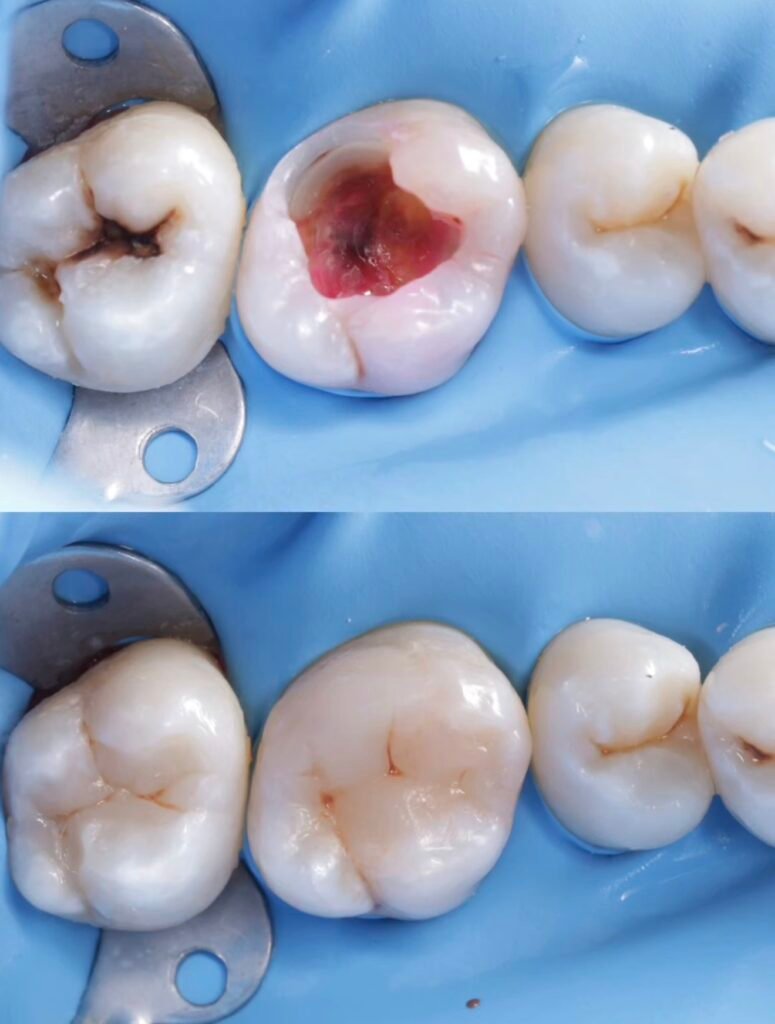
Most Patients Think a Filling Is “Just a Filling”
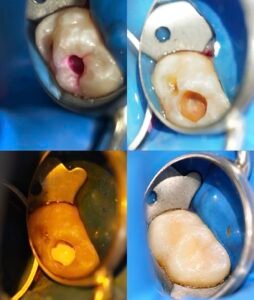
When patients hear the words “tooth-colored filling“, they often imagine a straightforward procedure.
A cavity is cleaned.
A white material is placed.
The tooth is restored.
Treatment is complete.
In reality, the final result depends on dozens of decisions that patients never see.
The materials selected.
The moisture control during treatment.
The way the tooth is prepared.
The bonding protocol.
The anatomy recreated by the dentist.
The finishing and polishing process.
The photographic documentation.
The attention paid to tiny details that may appear insignificant at the time but can influence how a restoration performs years later.
At Gelos Dentistry, we believe restorative dentistry should do more than fill a hole in a tooth.
Our goal is to recreate natural form, function, strength, and aesthetics as accurately as possible.
Because when a restoration truly mimics nature, patients often forget which tooth was treated.
The Problem With “Quick Fillings”
Many restorations fail long before the material itself wears out.
However, the problem often lies elsewhere.
In many cases, seemingly minor details during treatment can significantly influence the long-term performance of a restoration.
Small gaps at the margins. Moisture contamination during bonding. Incomplete isolation. Poor contouring. Inadequate polishing. An incomplete understanding of natural tooth anatomy.
Individually, these factors may appear insignificant. Collectively, however, they can compromise the longevity and performance of a restoration.
As a result, patients may experience:
- Food trapping between teeth
- Sensitivity while eating or drinking
- Marginal staining around the restoration
- Secondary decay developing beneath the filling
- Chipping or fracture of the restoration
- Premature replacement and additional treatment
Initially, a restoration may appear perfectly acceptable. Over time, however, hidden deficiencies can gradually lead to functional or aesthetic concerns.
Therefore, the long-term success of a restoration depends not only on the quality of the material itself but also on the clinical protocols, attention to detail, and precision applied throughout every stage of treatment.
Why Isolation Is One of the Most Important Steps
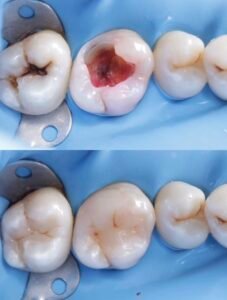
Imagine trying to glue two pieces of glass together while water continuously flows between them. The bond would be compromised.
The same principle applies to adhesive dentistry.
Modern composite restorations rely on sophisticated bonding systems that require a clean and controlled environment.
Even small amounts of saliva, blood, or moisture can affect the bonding process.
This is one reason why we routinely utilise rubber dam isolation whenever clinically appropriate.
The Rubber Dam: One of Dentistry’s Most Underutilised Tools
Patients often assume the rubber dam exists primarily for comfort.
In reality, it serves a much more important purpose.
A rubber dam isolates the treatment area from saliva and moisture, creating a controlled environment for adhesive procedures.
This allows us to:
- Improve bonding reliability
- Reduce contamination
- Enhance visibility
- Improve access
- Increase procedural precision
Many of the world’s leading restorative dentists consider proper isolation essential for predictable adhesive dentistry.
Unfortunately, rubber dam use remains inconsistent in many clinical settings despite its significant advantages.
Restoring a Tooth Is Not the Same as Rebuilding a Tooth
A cavity rarely removes tooth structure in a uniform shape. Decay weakens specific areas while leaving others intact.
As a result, every restoration requires individualised planning.
Before placing composite, we evaluate:
- Remaining enamel
- Remaining dentin
- Occlusal forces
- Cusp support
- Contact points
- Aesthetic requirements
Rather than simply replacing missing material, we aim to rebuild the tooth in a way that respects its original architecture.
Natural Teeth Are Complex Structures
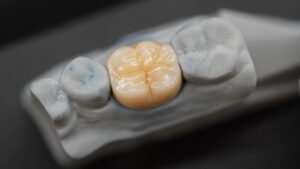
Nature does not create flat teeth.
Every tooth contains:
- Grooves
- Ridges
- Inclines
- Embrasures
- Contact areas
These features influence how teeth function during chewing.
When restorative dentistry ignores these details, problems can develop.
Food may become trapped.
Biting forces may become uneven.
The restoration may feel bulky or unnatural.
At Gelos Dentistry, we carefully recreate natural anatomy so the restored tooth integrates harmoniously with the surrounding dentition.
Why Layering Matters in Composite Dentistry
Composite resin is an extraordinary material.
However, achieving natural-looking results requires more than simply filling a preparation with composite.
Modern restorative dentistry often involves incremental placement techniques that allow better control over:
- Adaptation
- Polymerization
- Strength
- Aesthetics
Each layer contributes to the final result. The goal is not merely to fill space. The goal is to recreate a natural tooth.
Premium Materials Alone Do Not Guarantee Premium Results
Patients frequently ask whether a particular composite brand is “the best.” The reality is more nuanced.
Even the most advanced material cannot compensate for poor technique.
Clinical protocols matter. Isolation matters. Diagnosis matters. Occlusal analysis matters. Attention to detail matters.
High-quality materials certainly play an important role, but long-term success depends on how those materials are used.
Every Restoration Tells a Story
One of the defining characteristics of modern restorative dentistry is thorough documentation.
In fact, many patients are surprised when we photograph their teeth before, during, and after treatment.
However, these photographs serve a purpose far beyond simple record-keeping.
They allow us to:
- Assess treatment quality more objectively
- Monitor outcomes over time
- Communicate findings more effectively with patients
- Review important clinical details
- Maintain comprehensive and accurate records
Furthermore, documentation reflects a commitment to accountability and continuous improvement.
When clinicians carefully record each stage of treatment, they can evaluate their work with greater precision and consistency.
As a result, every detail receives closer attention, every decision becomes more deliberate, and the overall standard of care continues to improve.
Ultimately, comprehensive documentation helps ensure that treatment is guided not only by experience but also by careful observation, analysis, and long-term follow-up.
Dentistry Should Be Measurable
Historically, many restorations were evaluated solely by visual inspection.
Today, photography and magnification allow us to assess treatment with far greater precision.
By documenting each stage of treatment, we can evaluate:
- Marginal adaptation
- Anatomical accuracy
- Surface finish
- Contact points
- Overall aesthetics
This approach encourages continuous improvement and helps maintain consistently high standards.
Magnification Changes Everything
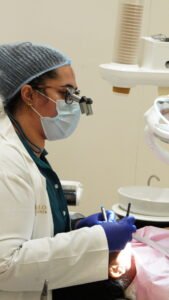
The naked eye has limitations.
Small gaps.
Tiny voids.
Microscopic defects.
Subtle anatomical details.
Many of these become easier to identify under magnification.
Whether through loupes or operating microscopes, enhanced visualisation allows clinicians to work more precisely and preserve healthy tooth structure whenever possible.
Restorative Dentistry Is About Preservation
Modern dentistry has moved away from the philosophy of removing large amounts of healthy tooth structure.
Today, the emphasis lies in preserving as much natural tooth as possible.
Every millimetre of healthy enamel and dentin matters.
A conservative restoration not only protects the tooth today but may also influence treatment options decades into the future.
The Goal Is Simplicity That Looks Natural
The best restorations rarely attract attention.
They blend seamlessly, feel comfortable & function naturally.
Patients often forget which tooth was restored.
That is the ultimate compliment.
Because successful restorative dentistry should restore confidence, comfort, and function without drawing attention to itself.
Why Our Approach Matters
At Gelos Dentistry, restorative dentistry combines science, technology, magnification, photography, isolation, premium materials, and meticulous attention to detail.
Every restoration represents an opportunity to preserve natural tooth structure, restore function, and create a result that serves patients well for years to come.
We believe patients deserve more than a quick repair.
They deserve thoughtful, evidence-based dentistry that prioritises long-term oral health.
ABOUT THE AUTHOR

Dr. Harnoor Dhillon is a Gold Medalist dental surgeon and Founder of Gelos Dentistry, a Specialist-led Multispeciality Dental Practice. She is recognised for her academic excellence and is a recipient of multiple professional honours during her training, and has developed a keen interest in digital dentistry, microscopic endodontics and comprehensive oral rehabilitation. Through Gelos Dentistry, she aims to bring world-class technology, specialist-led care and an ethical patient-first philosophy to the Tricity region.