
The Complete Guide to Clear Aligners: Everything Patients Need to Know
Introduction: Why More Adults Are Choosing Clear Aligners
A generation ago, orthodontic treatment was often associated with metal brackets, visible wires, and years of awkward school photographs.
Today, that image has changed dramatically.
Across the world, millions of adults are choosing clear aligners as a discreet, comfortable, and technology-driven alternative to conventional braces. Professionals, entrepreneurs, doctors, teachers, and even grandparents are seeking orthodontic treatment later in life because modern aligner systems allow them to improve their smiles without drawing attention to the process.
Yet despite their growing popularity, many patients still have questions.
Do clear aligners actually work?
Are they only meant for minor corrections?
How long does treatment take?
Can they replace braces completely?
This guide answers those questions and more. Whether you are considering Invisalign or another clear aligner system, understanding the process can help you make an informed decision about your smile.
What Exactly Are Clear Aligners?
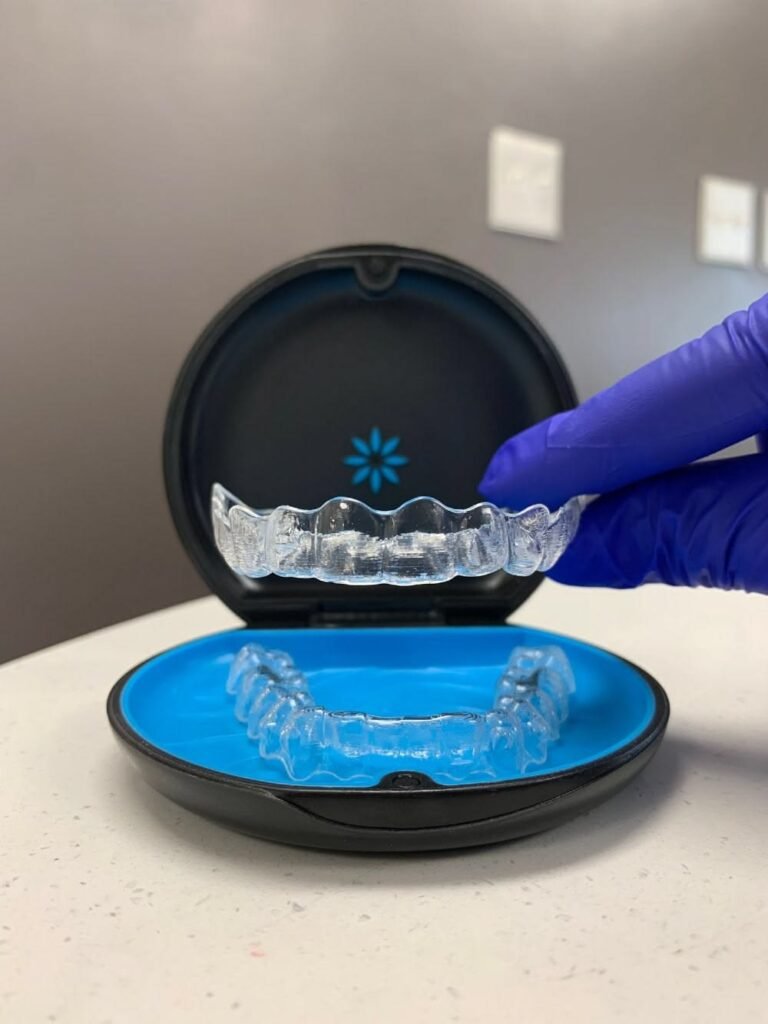
Clear aligners are custom-made transparent trays designed to gradually move teeth into more favourable positions.
Unlike traditional braces, which use brackets and wires attached to the teeth, clear aligners fit snugly over the teeth and apply gentle, controlled forces to create movement.
Each aligner in the series is slightly different from the previous one.
As you progress through treatment, your teeth gradually move according to a carefully planned digital sequence.
Think of them as a series of small steps rather than one large movement.
The result is often a more comfortable orthodontic experience with significantly greater convenience and aesthetics.
Why Straight Teeth Matter Beyond Appearance
Many people assume orthodontic treatment is purely cosmetic.
In reality, properly aligned teeth often contribute to better oral health and long-term function.
When teeth are crowded, overlapping, or rotated, cleaning becomes more difficult.
Plaque tends to accumulate in hard-to-reach areas.
Food debris can become trapped.
Gums may become inflamed more easily.
Similarly, certain bite problems can contribute to uneven tooth wear, excessive stress on specific teeth, and challenges during chewing.
While a beautiful smile is certainly a benefit, orthodontic treatment frequently improves oral health, function, and maintainability as well.
The Evolution of Orthodontics
Orthodontics has undergone a remarkable transformation over the past two decades.
Traditional impressions have largely been replaced by digital scanning.
Physical stone models have given way to virtual simulations.
Treatment planning has become increasingly precise through advanced software.
Today, dentists can often demonstrate projected tooth movements before treatment even begins.
This digital evolution has made orthodontic treatment more predictable, more comfortable, and easier for patients to understand.
Clear aligners represent one of the most significant developments in this transformation.
How Clear Aligners Move Teeth
Many patients are fascinated by a simple question:
How can a thin plastic tray move something as solid as a tooth?
The answer lies in biology.
Teeth are not fused directly to bone.
Instead, they are suspended by a specialised structure known as the periodontal ligament.
When controlled forces are applied to a tooth, the surrounding bone gradually remodels.
Bone is removed from one side of the tooth and deposited on the other.
This process allows teeth to move safely over time.
Clear aligners apply these forces in carefully calculated directions, guiding teeth toward their planned positions through a series of incremental movements.
Who Is a Good Candidate for Clear Aligners?
One of the most common misconceptions is that clear aligners are suitable only for minor cosmetic improvements.
Modern aligner systems can successfully address a surprisingly broad range of orthodontic concerns.
These may include:
Crowded Teeth
Teeth that overlap because there is insufficient space within the dental arch.
Spacing Between Teeth
Gaps that affect aesthetics, function, or food retention.
Protruding Front Teeth
Teeth that project excessively forward.
Relapse Following Previous Braces
Many adults who had braces during childhood experience shifting over time due to inconsistent retainer wear.
Mild to Moderate Bite Issues
Selected cases involving crossbites, deep bites, and certain open bites may respond very well to aligner therapy.
The best way to determine suitability is through a comprehensive orthodontic evaluation and digital assessment.
The Consultation: Where Treatment Really Begins
Many patients believe treatment begins when the first aligner is inserted.
In reality, treatment begins much earlier.
Successful orthodontics starts with diagnosis.
At Gelos Dentistry, the consultation process focuses on understanding far more than tooth alignment alone.
We evaluate:
- Smile aesthetics
- Facial balance
- Bite relationships
- Existing restorations
- Gum health
- Jaw function
- Patient goals and expectations
This information helps create a treatment plan tailored to the individual rather than applying a one-size-fits-all approach.
The Role of Digital Intraoral Scanning
One of the most exciting aspects of modern aligner treatment is the elimination of conventional impressions in many cases.
Instead of filling trays with impression material, advanced intraoral scanners capture thousands of digital images within minutes.
These images are combined to create an accurate three-dimensional model of the teeth.
Patients can immediately visualise their own dentition on a screen, often seeing areas of crowding, wear, and bite discrepancies more clearly than ever before.
Digital scanning improves comfort while providing highly detailed information for treatment planning.
Seeing Your Future Smile Before Treatment Begins
Imagine being able to preview the direction of your orthodontic treatment before wearing a single aligner.
Modern software makes this possible.
Using digital scans and treatment planning systems, clinicians can simulate tooth movements and create visual projections of the expected outcome.
This process helps patients understand:
- Treatment goals
- Planned tooth movements
- Estimated timelines
- Potential limitations
For many individuals, seeing this preview provides the confidence needed to begin treatment.
Why Compliance Determines Success
Clear aligners offer remarkable convenience.
However, they also place responsibility in the hands of the patient.
Unlike fixed braces, aligners can be removed.
This flexibility is a major advantage, but it also means treatment depends heavily on consistent wear.
Most aligner systems require approximately 20 to 22 hours of daily wear.
Patients should remove them only for:
- Eating
- Drinking anything other than water
- Brushing
- Flossing
Aligners cannot move teeth while sitting on a bedside table.
Patients who follow recommended wear schedules generally experience smoother and more predictable treatment progress.
What Are Attachments and Why Are They Needed?
Patients are often surprised when small tooth-coloured shapes are bonded to certain teeth during treatment.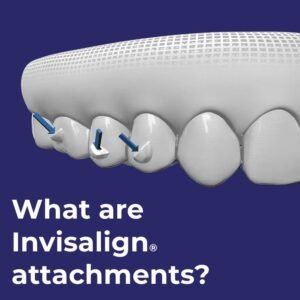
These are called attachments.
Attachments act like tiny handles that help aligners create more complex tooth movements.
They may improve:
- Rotations
- Root movements
- Intrusion
- Extrusion
- Bite correction
Although patients notice them initially, most quickly adapt and barely think about them after a few days.
Eating and Drinking During Treatment
One of the most appreciated advantages of clear aligners is dietary freedom.
Traditional braces often require patients to avoid sticky foods, hard foods, and certain snacks.
Clear aligners eliminate most of these restrictions.
Simply remove the aligners before meals and enjoy food normally.
After eating, brush if possible, rinse, and reinsert the aligners.
This flexibility significantly improves the overall treatment experience.
Oral Hygiene Becomes Easier
Orthodontic treatment should never come at the expense of oral health.
Because aligners are removable, patients can continue their normal oral hygiene routines without major obstacles.
Brushing remains straightforward.
Flossing remains straightforward.
Professional cleanings remain uncomplicated.
This often helps patients maintain healthier gums throughout treatment compared with more difficult hygiene situations around fixed appliances.
How Long Does Clear Aligner Treatment Take?
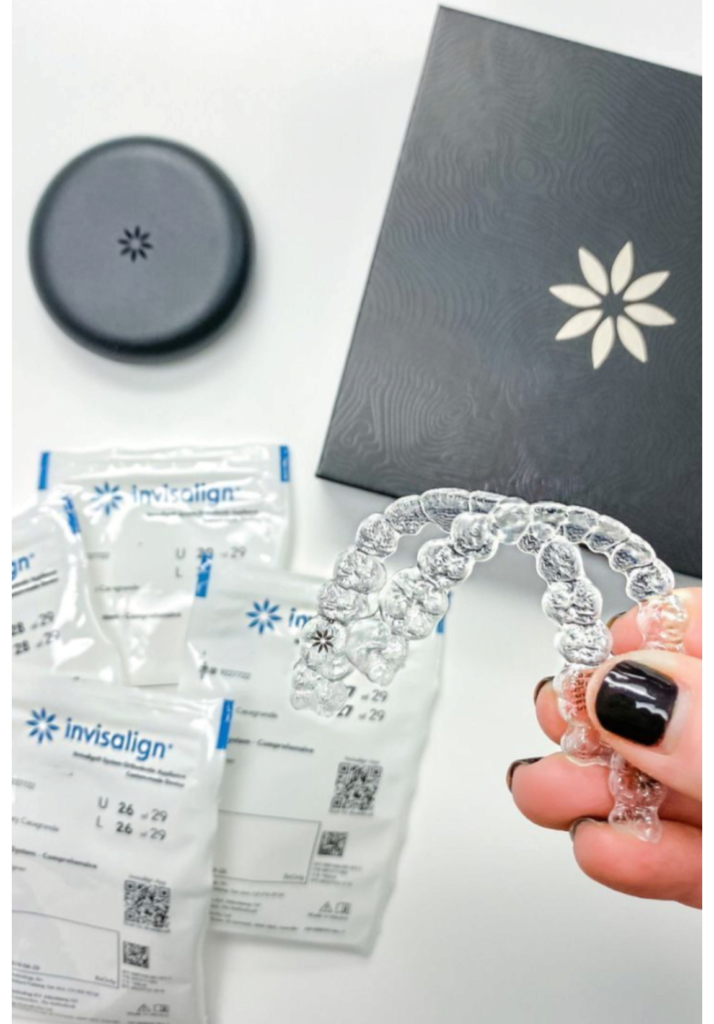
Treatment duration varies considerably depending on complexity.
Some patients require only minor corrections.
Others require comprehensive orthodontic movement involving both arches.
In general, treatment may range from a few months to well over a year.
Factors influencing duration include:
- Severity of crowding
- Bite discrepancies
- Treatment goals
- Biological response
- Patient compliance
Every case is unique.
For this reason, timelines should always be personalised rather than generalised.
Are Clear Aligners Better Than Braces?
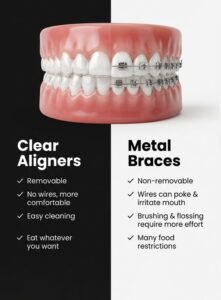
This is one of the most frequently asked questions in dentistry.
The truth is that neither system is universally superior.
Each has strengths.
Clear aligners excel in:
- Aesthetics
- Comfort
- Hygiene
- Convenience
- Professional appearance
Traditional braces continue to play an important role in certain complex orthodontic situations.
The ideal solution depends on the specific clinical circumstances of each patient.
A comprehensive evaluation helps determine which option is most appropriate.
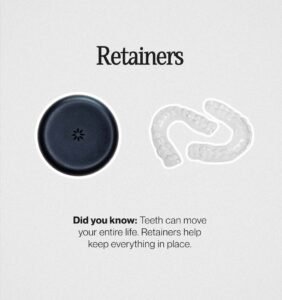
Life After Treatment: Why Retainers Matter
One of the biggest misconceptions in orthodontics is that treatment ends when the final aligner is completed.
In reality, retention is a critical phase of treatment.
Teeth naturally possess a tendency to shift over time.
Without retainers, even beautifully aligned teeth may gradually relapse.
Retainers help preserve the results achieved through months of orthodontic treatment.
Patients who commit to retention protect both their investment and their smile.
Choosing the Right Provider Matters More Than Choosing the Brand
Patients often spend considerable time comparing different aligner brands.
However, the most important variable is often the clinician planning and supervising treatment.
Successful outcomes depend upon:
- Accurate diagnosis
- Thoughtful treatment planning
- Understanding of facial aesthetics
- Knowledge of orthodontic biomechanics
- Careful monitoring throughout treatment
The aligners themselves are tools.
The expertise behind the treatment determines the quality of the final result.
The Future of Orthodontics Is Digital
Modern orthodontics continues to evolve rapidly.
Digital workflows now integrate:
- Intraoral scanning
- Artificial intelligence
- Three-dimensional treatment planning
- Virtual smile simulations
- Advanced manufacturing technologies
These innovations allow clinicians to plan treatments with extraordinary precision while helping patients better understand every stage of their orthodontic journey.
Clear aligners are not simply a cosmetic trend.
They represent a significant advancement in the way orthodontic care is delivered.
Final Thoughts
Clear aligners have transformed the orthodontic experience for millions of people worldwide.
They offer an elegant combination of aesthetics, convenience, technology, and effectiveness that appeals particularly to modern adults seeking discreet treatment.
However, successful aligner therapy depends on more than simply wearing clear trays. Proper diagnosis, comprehensive planning, consistent compliance, and long-term retention all contribute to excellent outcomes.
At Gelos Dentistry, we combine advanced digital dentistry, detailed treatment planning, and personalised patient care to create aligner treatments that focus not only on straighter teeth, but also on healthier, more confident smiles that stand the test of time.
If you have ever wondered whether clear aligners could work for you, a comprehensive consultation may be the first step toward discovering what is possible.