
Digital Intraoral Scanners: The Future of Dental Impressions & Modern Dentistry
Why So Many Patients Dread Traditional Dental Impressions?
Almost everyone who has undergone extensive dental treatment remembers the experience of having impression material placed inside their mouth.
For decades, these traditional impressions remained an essential part of dentistry. Dentists used them to create crowns, bridges, aligners, retainers, veneers, implant restorations, and many other dental appliances.
Although effective, traditional impressions came with limitations. They depended heavily on material accuracy, patient cooperation, and proper handling. Even minor distortions could affect the final result.
Today, digital technology has transformed this process.
Modern intraoral scanners allow dentists to create highly accurate digital impressions without impression trays, messy materials, or unnecessary discomfort.
At Gelos Dentistry, we believe technology should improve both treatment outcomes and patient experiences. Digital intraoral scanning represents one of the most patient-friendly innovations in modern dentistry.
What Is an Intraoral Scanner?
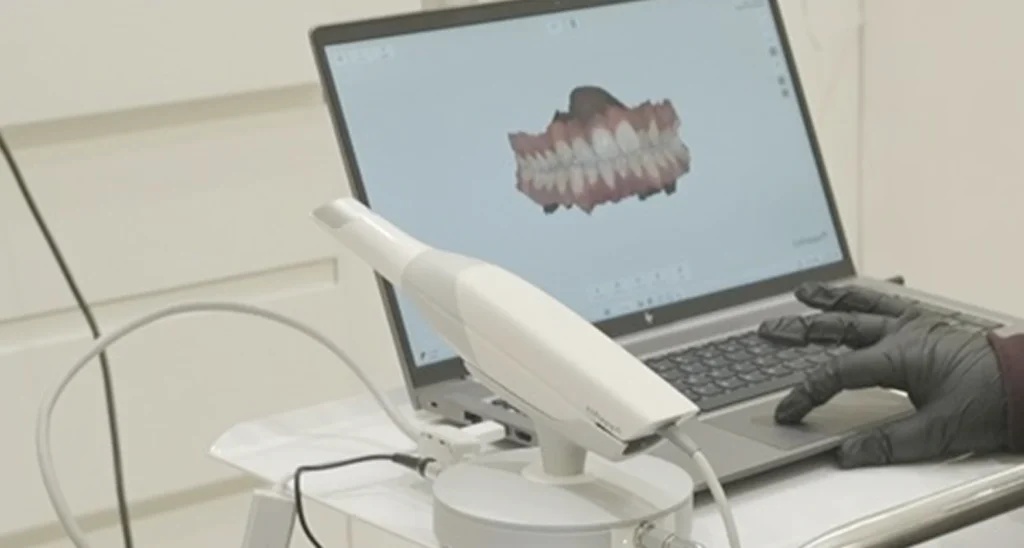
An intraoral scanner is a handheld digital device that captures thousands of images inside the mouth and combines them into a highly detailed three-dimensional model of the teeth and gums.
Instead of filling a tray with impression material and waiting for it to set, the dentist simply moves the scanner over the teeth while the software records precise digital information.
Within minutes, a virtual model appears on a computer screen.
Patients can immediately see a detailed digital representation of their own teeth, often with a level of clarity they have never experienced before.
The result is a highly accurate digital impression that can be used for diagnosis, treatment planning, and laboratory fabrication.
From Physical Moulds to Digital Precision
Traditional impressions have served dentistry well for many years.
However, they involve several steps that can introduce inaccuracies:
- Material distortion
- Air bubbles
- Tray movement
- Improper setting
- Laboratory handling errors
Digital scanning eliminates many of these variables.
Because the impression exists in a digital format, clinicians can immediately review it for completeness and accuracy before proceeding.
If additional information is required, it can often be captured instantly without repeating the entire process.
This improves efficiency while reducing the likelihood of remakes and adjustments.
How Does Digital Intraoral Scanning Work?
The process is remarkably simple.
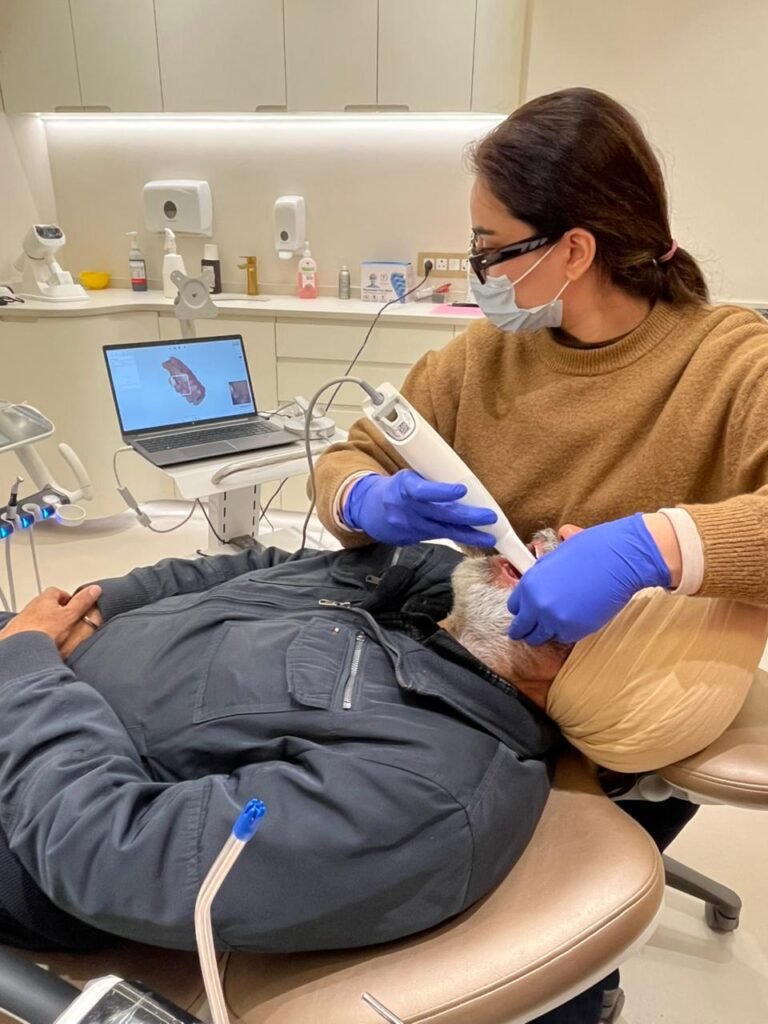
A small scanning wand is gently moved around the teeth and gums while the system captures thousands of images every second.
Advanced software then combines these images into a detailed 3D model.
Patients can watch the model develop in real time on the screen.
Many find this experience fascinating because it allows them to visualise their oral health in a completely new way.
The scan typically takes only a few minutes and requires no special preparation.
A More Comfortable Experience for Patients
One of the most immediate benefits patients notice is comfort.
Traditional impressions often cause:
- Gagging
- Claustrophobic sensations
- Difficulty breathing through the nose
- Anxiety
- Unpleasant taste
Digital scanning eliminates these concerns for most patients.
Without bulky trays or impression materials, appointments become more comfortable and less stressful.
This advantage is particularly important for children, elderly patients, and individuals with strong gag reflexes.
Seeing Your Teeth in Real Time
Digital dentistry is not just about technology. It is also about communication.
Many patients struggle to understand treatment recommendations because they cannot see what their dentist sees.
With digital intraoral scanning, the conversation changes.
Patients can view their own teeth, restorations, wear patterns, fractures, crowding, and gum conditions directly on the screen.
This visual approach helps patients become active participants in their care.
Instead of simply being told what needs attention, they can see it for themselves.
Why Accuracy Matters
In dentistry, even fractions of a millimetre can influence treatment outcomes.
A crown that does not fit properly can lead to discomfort and repeated adjustments.
An aligner that lacks precision may not move teeth as intended.
An implant restoration must fit accurately to function properly over the long term.
Digital impressions provide exceptional accuracy, helping dentists and laboratories create restorations that fit more predictably.
This level of precision contributes to improved comfort, better aesthetics, and enhanced long-term success.
Digital Scanners and Cosmetic Dentistry
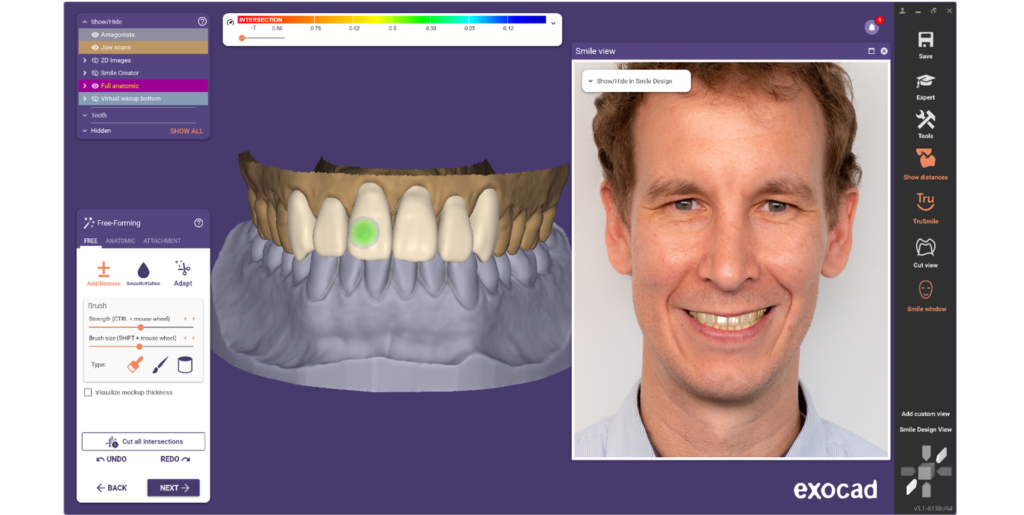
Modern smile makeovers depend heavily on precision.
When creating veneers, crowns, or aesthetic restorations, every detail matters.
Digital scans allow clinicians to evaluate:
- Tooth proportions
- Smile symmetry
- Alignment
- Gingival contours
- Occlusion
These digital records become an important part of treatment planning and communication.
For patients investing in cosmetic dentistry, this technology helps ensure that treatment is based on detailed information rather than assumptions.
The Role of Intraoral Scanners in Clear Aligner Treatment
Clear aligners have become one of the most popular orthodontic options for adults and teenagers.
The success of aligner treatment begins with accurate records.
Digital scanning provides a precise representation of tooth position and alignment, allowing treatment planning software to simulate tooth movement and create custom aligners.
Patients often appreciate being able to visualise their proposed treatment before it begins.
Digital Implant Dentistry Starts with Accurate Scans
Dental implant treatment requires meticulous planning.
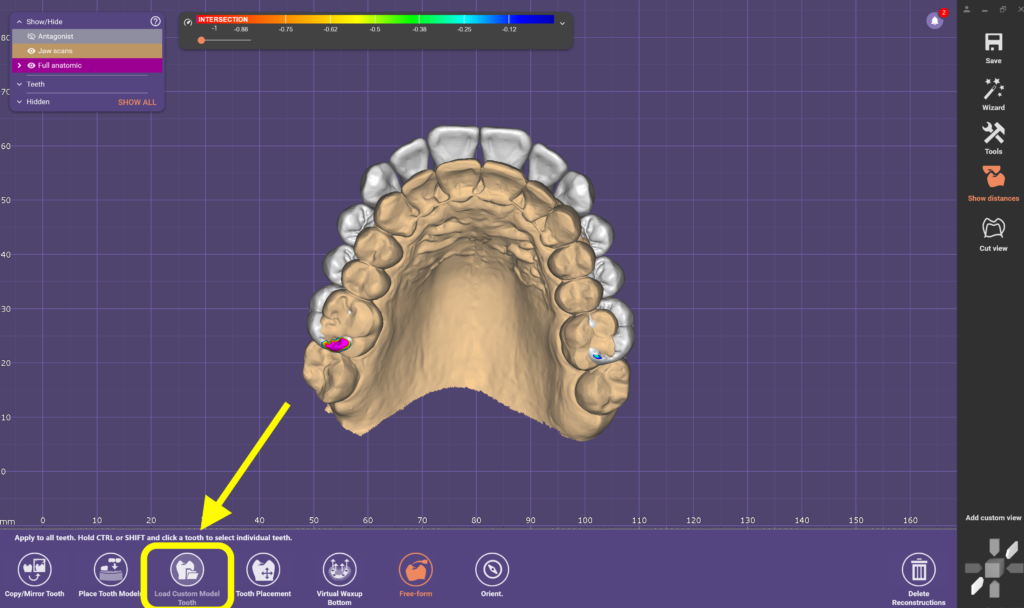
Intraoral scans work alongside CBCT imaging to create a comprehensive digital workflow.
While CBCT imaging evaluates bone and anatomy, intraoral scanning captures the surface details of teeth and gums.
Together, these technologies help clinicians plan restorations with exceptional accuracy.
This integration forms an important part of modern implant dentistry.
Better Communication Between Dentist and Laboratory
Traditional impressions often require physical shipping and handling.
Digital files can be transferred almost instantly.
This allows dental laboratories to begin work more quickly while reducing the risk of damage or distortion.
Improved communication between clinicians and technicians contributes to better-fitting restorations and a more efficient treatment process.
A Valuable Tool for Monitoring Oral Health
Digital scans do more than create restorations. They also serve as detailed records of a patient’s oral condition.
By comparing scans taken over time, dentists can monitor:
- Tooth wear
- Gum recession
- Changes in alignment
- Fractures
- Restorations
This makes digital scanning a powerful diagnostic and monitoring tool.
Is Digital Scanning Suitable for Everyone?
In most cases, yes. Digital scanning can be used for:
- Crowns
- Bridges
- Veneers
- Aligners
- Retainers
- Implant restorations
- Smile makeovers
- Orthodontic treatment
Your dentist will determine the most appropriate approach based on your specific clinical needs.