
Mouth Breathing vs Nasal Breathing: Why the Way We Breathe Matters

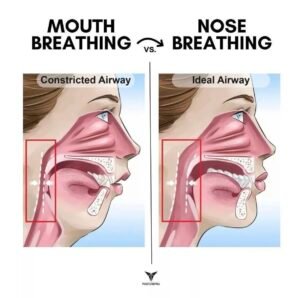
The Human Body Was Designed to Breathe Through the Nose
The nose serves many important functions beyond simply allowing air to enter the body.
As air passes through the nasal passages, it becomes filtered, humidified, and warmed before reaching the lungs. Tiny structures inside the nose help remove dust, allergens, pollutants, and microorganisms that would otherwise travel deeper into the respiratory system.
Nasal breathing also promotes the production of nitric oxide, a naturally occurring molecule that supports oxygen delivery and healthy circulation.
When breathing occurs through the nose, the tongue typically rests against the roof of the mouth, supporting normal development of the upper jaw and surrounding facial structures.
This is why healthcare professionals generally consider nasal breathing the body’s preferred breathing pattern.
What Is Mouth Breathing?
Mouth breathing occurs when an individual habitually breathes through the mouth rather than the nose.
Sometimes this happens temporarily because of a cold, allergies, or nasal congestion.
In other cases, mouth breathing becomes a long-term habit that continues even after the original cause has resolved.
Many people are surprised to learn that mouth breathing can occur during sleep even when they appear to breathe normally during the day.
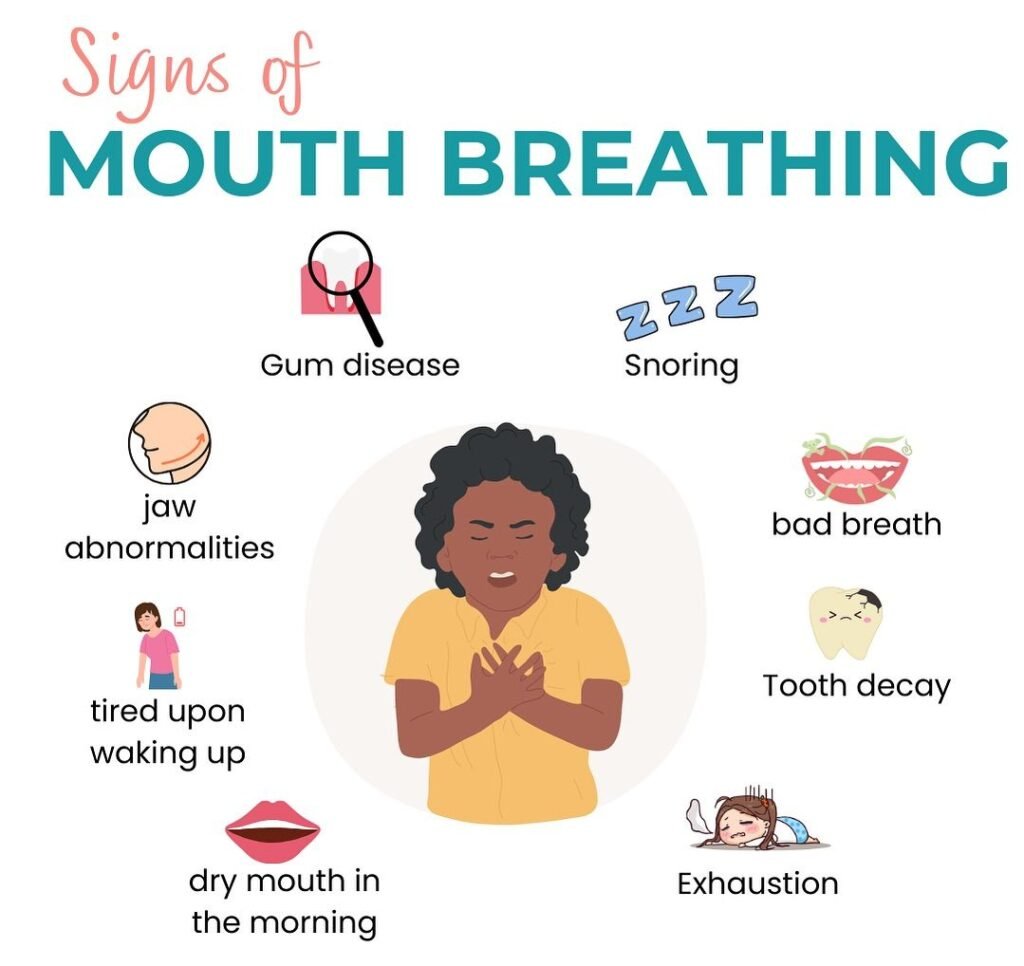
Common signs include:
- Sleeping with the mouth open
- Dry mouth upon waking
- Snoring
- Chapped lips
- Restless sleep
- Frequent thirst at night
- Chronic bad breath
- Daytime fatigue
Many parents first notice these signs in their children long before any dental concerns become obvious.
Why Does Tongue Position Matter?
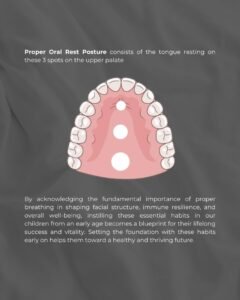
One of the most important differences between nasal breathing and mouth breathing involves tongue posture.
When breathing occurs through the nose, the tongue naturally rests against the palate.
This gentle pressure helps guide normal development of the upper jaw throughout childhood.
When a child habitually breathes through the mouth, the tongue often drops lower inside the mouth.
Over time, this altered posture may influence how the jaws develop and how much space becomes available for erupting teeth.
Although genetics play an important role in facial growth, function and posture also contribute to developmental patterns.
How Mouth Breathing May Influence Facial Development
Researchers have spent decades studying the relationship between breathing patterns and craniofacial growth.
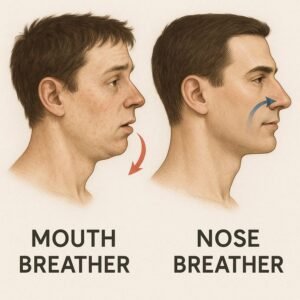
Children who experience chronic airway obstruction or long-term mouth breathing may develop facial characteristics that differ from those of predominantly nasal breathers.
These characteristics can include:
- Narrow upper jaws
- Crowded teeth
- Increased overjet
- High palatal vaults
- Longer facial profiles
- Dark circles beneath the eyes
- Lip incompetence
Not every mouth breather develops these features, and not every child with these features is a mouth breather.
However, the association has been widely documented in orthodontic and craniofacial literature.
Mouth Breathing and Sleep Quality
Breathing patterns influence much more than facial growth.
Healthy breathing supports healthy sleep.
Many individuals who struggle with chronic mouth breathing also report:
- Snoring
- Frequent awakenings
- Restless sleep
- Morning fatigue
- Reduced concentration
Children may sometimes present differently.
Instead of appearing tired, they may become hyperactive, irritable, or struggle with attention during the day.
Poor sleep quality can affect academic performance, mood, and overall well-being.
Causes of Mouth Breathing
Several factors may contribute to chronic mouth breathing.
Common causes include:
Enlarged Adenoids
Adenoids are lymphatic tissues located behind the nasal cavity. Enlargement can partially block airflow through the nose.
Enlarged Tonsils
Large tonsils may reduce airway space and contribute to breathing difficulties during sleep.
Chronic Allergies
Persistent nasal congestion often encourages mouth breathing.
Deviated Nasal Septum
Structural differences inside the nose can restrict airflow.
Habitual Mouth Breathing
Sometimes the original cause resolves, but the breathing pattern remains.
Identifying the underlying cause is often the first step toward improvement.
When Should Parents Be Concerned?
Parents should consider seeking professional evaluation if they notice:
- Consistent mouth-open posture
- Frequent snoring
- Chronic nasal congestion
- Restless sleep
- Crowded teeth developing early
- Difficulty keeping lips together at rest
- Dry mouth in the morning
Early assessment may help identify factors influencing facial growth and oral development before problems become more significant.
A Modern Approach to Evaluating Growth and Airway Health
Today’s technology allows clinicians to evaluate oral structures with far greater precision than ever before.
Digital scans, clinical photography, growth assessments, and CBCT imaging can help provide valuable information when clinically indicated.
At Gelos Dentistry, we believe every child deserves an individualised evaluation. Rather than focusing solely on the teeth, we aim to understand the broader factors that influence oral health, facial development, and long-term function.
Looking Beyond the Teeth
Straight teeth are important.
Healthy gums are important.
But modern dentistry increasingly recognises that oral health extends beyond the visible smile.
Breathing patterns, airway health, facial growth, sleep quality, tongue posture, and jaw development all interact in complex ways throughout life.
Understanding these relationships empowers patients and parents to make informed decisions about their oral health.
ABOUT THE AUTHOR

Dr. Harnoor Dhillon is a Gold Medalist dental surgeon and Founder of Gelos Dentistry, a Specialist-led Multispeciality Dental Practice. She is recognised for her academic excellence and is a recipient of multiple professional honours during her training, and has developed a keen interest in digital dentistry, microscopic endodontics and comprehensive oral rehabilitation. Through Gelos Dentistry, she aims to bring world-class technology, specialist-led care and an ethical patient-first philosophy to the Tricity region.